Driving Efficiency in Transportation & Logistics with Salesforce CRM
The transportation and logistics industry faces constant pressure to deliver speed, reliability, and transparency amidst increasing demand and real-time expectations. Companies encounter significant challenges managing fleets, coordinating with partners, tracking shipments, and maintaining seamless customer communication. Salesforce CRM emerges as an essential tool, enabling logistics firms to streamline operations, integrate with ERP systems, and enhance overall efficiency.
Fleet Management Optimization
Effective fleet management is critical for logistics efficiency. Salesforce CRM supports transportation companies by:
- Vehicle Data Management: Centralized vehicle records, maintenance schedules, and compliance documentation.
- Route Optimization: Integration with IoT and telematics tools for live vehicle tracking, optimizing routes in real-time, and reducing fuel consumption.
- Dispatch Automation: Automated scheduling, dispatch alerts, and vehicle utilization analytics to enhance fleet productivity.
For instance, DHL successfully integrated Salesforce CRM to optimize fleet routes, resulting in reduced fuel costs and improved delivery punctuality.
Shipment & Delivery Tracking
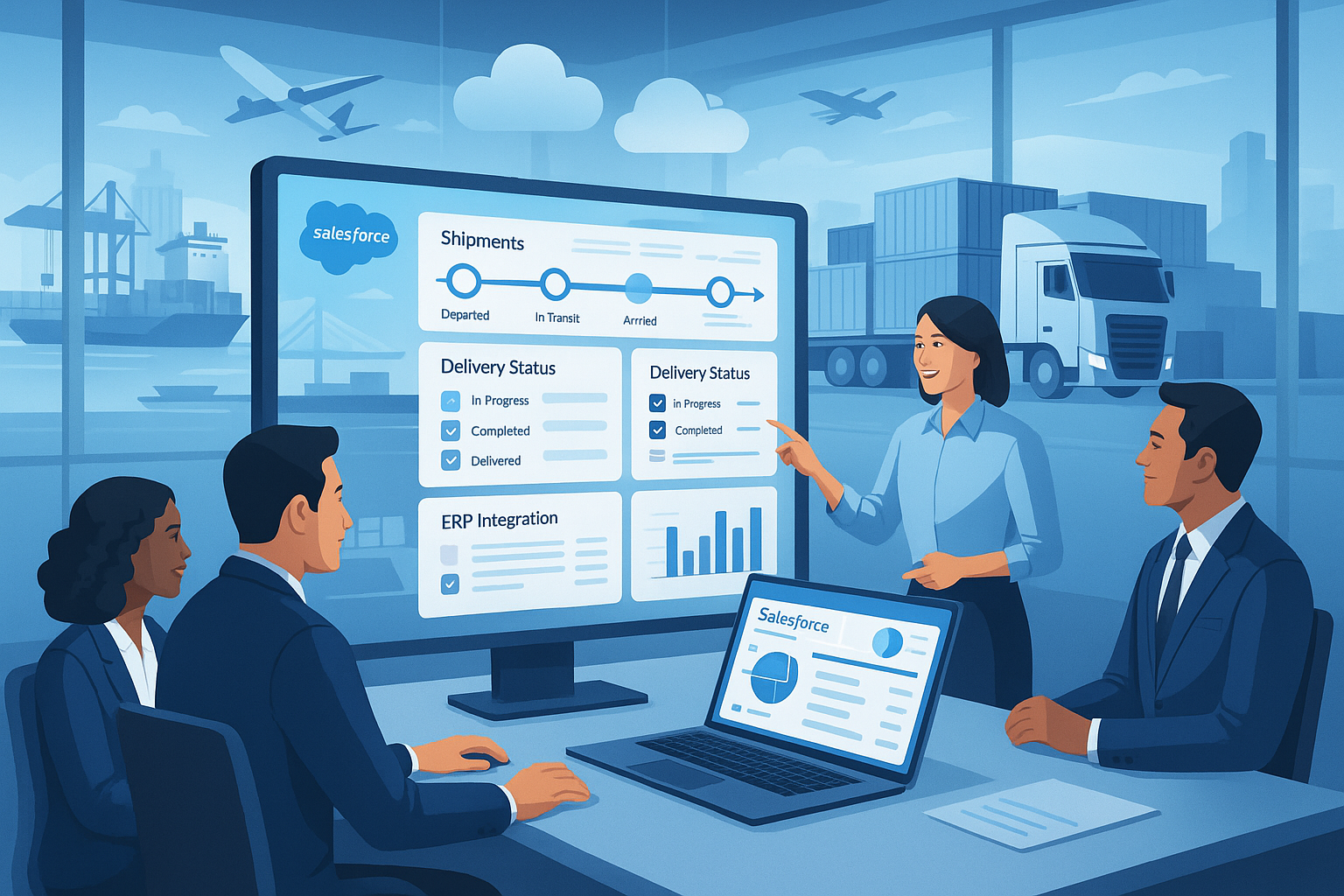
Real-time shipment tracking is vital for maintaining transparency and customer trust. Salesforce provides:
- Real-time Visibility: Immediate updates on shipment status and proactive alerts for any delays or disruptions.
- Issue Resolution: Automated workflows to address and resolve delivery issues swiftly, minimizing delays.
- Customer Updates: Timely and automated customer notifications about shipment status, significantly enhancing service-level agreement (SLA) compliance.
Companies utilizing Salesforce CRM typically experience reduced delivery delays, improved customer satisfaction, and streamlined operations.
Partner & Carrier Management
Effective management of third-party logistics providers (3PLs) and freight carriers is crucial. Salesforce CRM facilitates:
- Freight Scorecards: Monitoring performance metrics such as on-time deliveries, accuracy, and damage rates.
- Automated Communication: Streamlined interactions with vendors and carriers through automated messages, updates, and documentation.
- ERP Integration: Seamless integration with existing ERP and freight management systems, ensuring unified data across logistics operations.
Customer Communication with Marketing Cloud
Salesforce Marketing Cloud elevates customer engagement and satisfaction by delivering:
- Personalized Notifications: Targeted delivery updates, real-time shipment status, and tailored customer journeys.
- Automated Surveys: Immediate customer feedback loops post-delivery to gauge satisfaction and quickly address concerns.
- Journey Building: Customized B2B and B2C communication flows that improve transparency, loyalty, and customer retention.
Logistics firms leveraging Marketing Cloud witness marked improvements in customer experience metrics and higher retention rates.
Resilient Supply Chain Enablement
Achieving agility and resilience in logistics is paramount. Salesforce, alongside thought leaders like Ranosys, emphasizes the importance of resilient workflows, real-time analytics, and flexible operations. Aptivus Solutions further highlights localized APAC insights:
- Tailoring Salesforce CRM implementations to accommodate regional logistical nuances.
- Utilizing real-time analytics to swiftly adapt to market changes and disruptions.
For example, an APAC logistics firm enhanced regional responsiveness by adopting Salesforce’s localized solutions, resulting in improved operational agility and reduced supply chain disruptions.
AppExchange Tools & Ecosystem
To further enhance logistics capabilities, Salesforce’s AppExchange marketplace offers robust solutions:
- Fleet Analytics: Geotab integrates telematics for precise fleet tracking and analytics.
- Document Automation: Tools like Conga Composer automate freight documentation, significantly reducing administrative burdens.
- Compliance Management: Apps such as ComplianceQuest ensure adherence to industry standards and regulatory requirements.
Conclusion & Call to Action
Salesforce CRM empowers logistics companies with operational visibility, from initial quote to final delivery. By leveraging Salesforce’s capabilities, firms can optimize fleet management, improve shipment visibility, streamline partner coordination, and deliver exceptional customer experiences.
Ready to drive your logistics operations forward? Connect with Aptivus Solutions to explore customized Salesforce CRM solutions tailored for your transportation and logistics needs across APAC and beyond.
Have Questions or Need Assistance?
Our team of Salesforce experts is ready to help you implement the solutions discussed in this article.
Contact Us Today