How Nonprofits Can Leverage Salesforce: Fundraising, Donor Management & Beyond
Nonprofits increasingly choose Salesforce to enhance their mission impact due to its robust donor management capabilities, fundraising automation, and comprehensive nonprofit solutions like the Nonprofit Success Pack (NPSP) and Salesforce Nonprofit Cloud. This powerful CRM supports fundraising, donor engagement, volunteer management, and insightful reporting, empowering nonprofits to optimize their efforts and achieve greater mission outcomes.
Fundraising Transformation with Salesforce
Salesforce significantly streamlines fundraising processes:
- Donation Tracking & Campaign Management:
- Easily track donations and donor history.
- Segment donors to deliver targeted fundraising campaigns.
- Automate processes such as acknowledgment receipts and follow-ups.
- Recurring Donations & Pledge Management:
- Seamlessly manage recurring donations and pledges.
- Integrate with online giving platforms for efficient online fundraising.
- Data Visualization & Analysis:
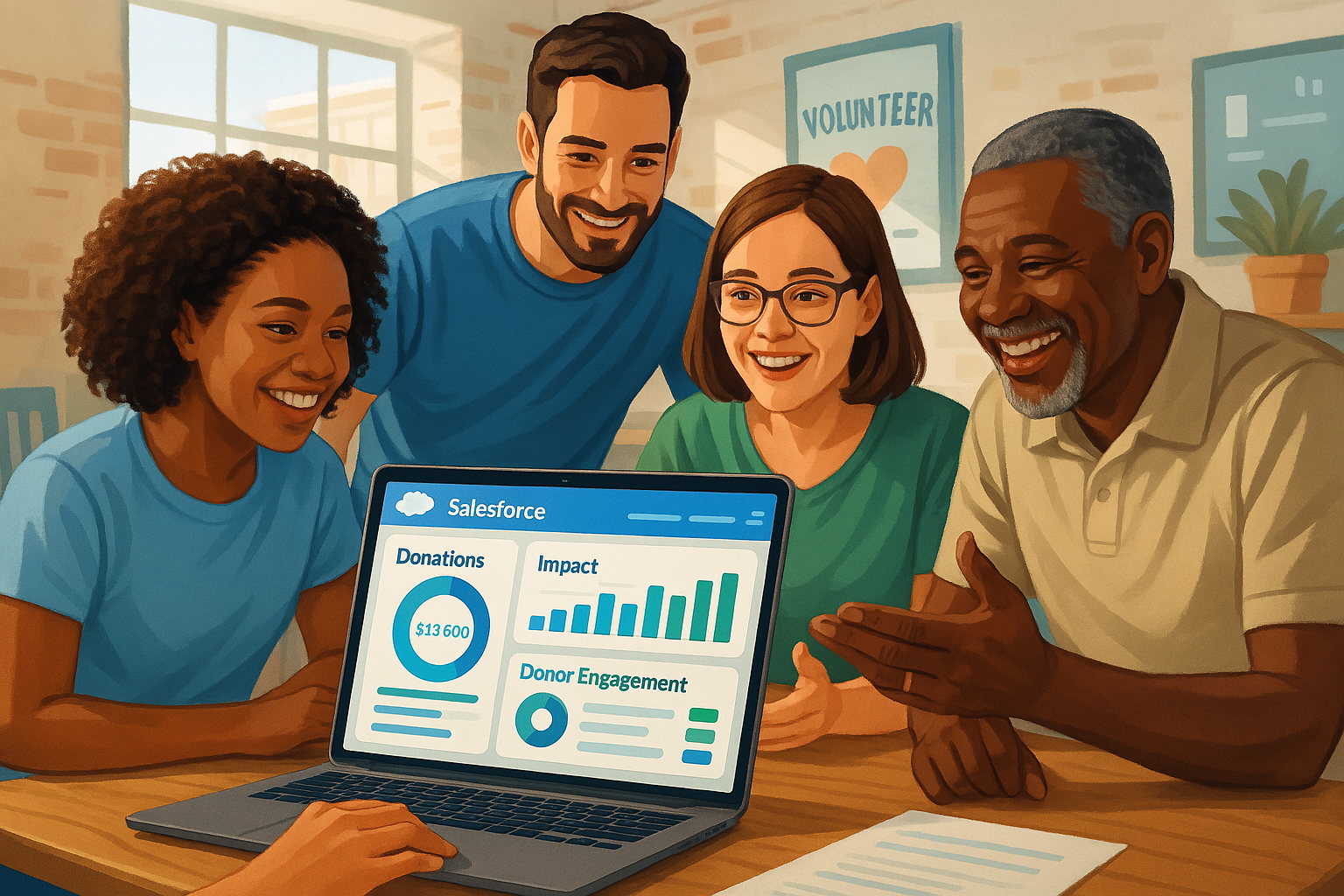
- Utilize Salesforce dashboards and reporting tools to visualize fundraising performance.
- Identify trends and adapt fundraising strategies proactively.
Donor Relationship Management
Salesforce enables nonprofits to deepen donor relationships through:
- 360-Degree Donor Views:
- Consolidate all donor interactions, preferences, and history in one place.
- Personalize communication based on comprehensive donor insights.
- Enhanced Engagement:
- Integrate Salesforce with email marketing platforms (e.g., Mailchimp, Pardot).
- Manage events, track participation, and link engagement directly to donor records.
- Grant Tracking & Management:
- Effectively manage grants, including application processes, reporting requirements, and disbursement tracking.
Beyond Fundraising – Additional Use Cases
Salesforce extends far beyond fundraising, supporting key nonprofit operations:
- Volunteer Management Software:
- Manage volunteer recruitment, onboarding, scheduling, and tracking volunteer hours seamlessly.
- Program Delivery & Impact Measurement Tools:
- Track program activities, beneficiaries, and outcomes using Salesforce's customizable program management features.
- Case Management:
- Manage client cases, track service delivery, and coordinate resources effectively.
- Community Engagement (Experience Cloud):
- Create interactive online communities for beneficiaries, donors, volunteers, and staff.
Data-Driven Decision Making
Leveraging Salesforce's robust analytics capabilities, nonprofits can:
- Create customized dashboards and KPIs tailored to their specific needs.
- Automate routine administrative tasks, reducing manual workload.
- Make data-informed strategic decisions that maximize their social impact.
Implementation Best Practices for Nonprofits
Effective Salesforce implementation involves key steps:
- Requirements Gathering:
- Clearly define your CRM goals, user needs, and expected outcomes.
- Choosing a Salesforce Partner:
- Select a partner with proven nonprofit experience and expertise with NPSP.
- User Training & Change Management:
- Invest in comprehensive training programs.
- Cultivate a positive, user-focused change management culture.
- Cost & Grant Considerations:
- Utilize Salesforce.org’s technology grants and discounted licenses.
- Integrate Salesforce with cost-effective fundraising platforms and tools.
Challenges & How to Overcome Them
Address common implementation hurdles proactively:
- Limited Staff Capacity:
- Leverage Salesforce automation to reduce manual tasks.
- Seek external implementation support when needed.
- Data Silos:
- Consolidate systems into Salesforce, ensuring centralized, accurate data.
- User Adoption Issues:
- Foster continuous learning and regularly solicit user feedback.
Case Study Highlights
Hope Community Services (Fictionalized Example)
Hope Community Services struggled with fragmented donor data and inefficient fundraising processes. After implementing Salesforce NPSP:
- Increased fundraising revenue by 35% in the first year.
- Improved donor retention rates by personalizing donor communications.
- Streamlined reporting processes, freeing staff to focus more on their mission.
Global Impact Fund (Fictionalized Example)
Global Impact Fund used Salesforce for program delivery and impact measurement:
- Gained real-time visibility into program outcomes.
- Enhanced volunteer engagement and management, reducing administration time by 40%.
Conclusion:
Salesforce empowers nonprofits to maximize their impact, streamline operations, and enhance donor relationships. By adopting Salesforce and leveraging best practices, nonprofit leaders can transform fundraising efficiency, deepen donor engagement, and drive data-informed strategies.
Ready to transform your nonprofit’s impact? Contact a certified Salesforce consultant today or explore resources available at Salesforce.org.
Have Questions or Need Assistance?
Our team of Salesforce experts is ready to help you implement the solutions discussed in this article.
Contact Us Today