Salesforce Multi‑Cloud Explained: A Beginner’s Guide to Smarter Integration
For years, businesses used different software for sales, service, and marketing—creating disconnected customer experiences and internal chaos. Salesforce Multi-Cloud ends this fragmentation. It’s not a single product, but a strategic approach to integrating multiple Salesforce clouds into one powerful, unified system. Think of it as building a symphony from what was once a collection of solo musicians. This guide breaks down how connecting these specialized platforms creates a seamless flow of data and action, empowering your business to deliver exceptional, intelligent customer journeys from end to end.
What is Salesforce Multi-Cloud? Beyond the Jargon
At its core, Salesforce Multi-Cloud is the practice of using and integrating two or more of Salesforce's specialized "clouds" to run a connected business operation.
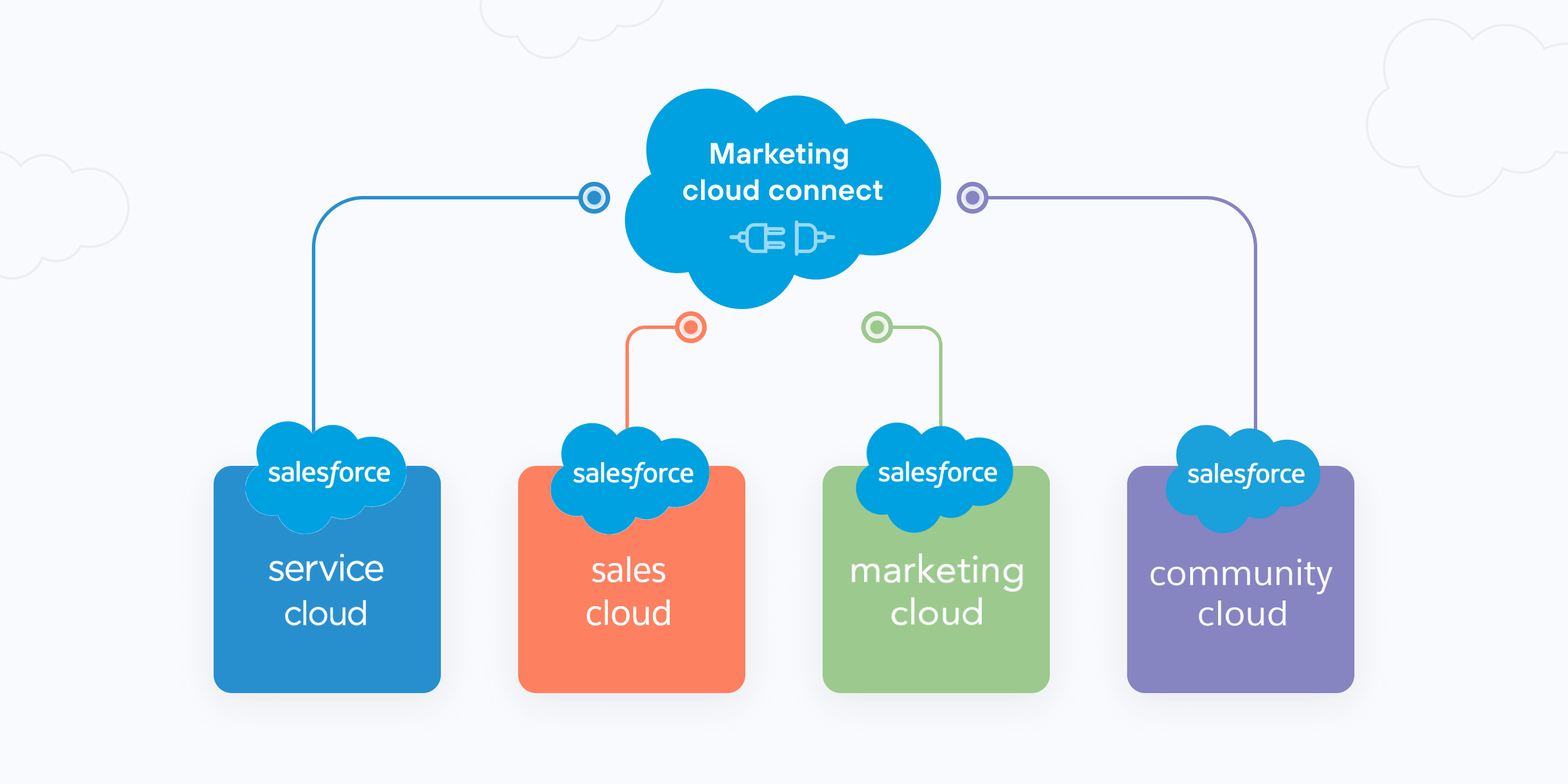
Instead of having your sales team in one system (Sales Cloud), your customer service agents in another (Service Cloud), and your marketers in a third (Marketing Cloud), a Multi-Cloud strategy connects them all on the shared Salesforce Platform. This creates a single source of truth for every customer interaction.
Why does this matter? A customer doesn't see your departments; they see one company. When your systems are siloed, a customer might receive a marketing promo for a product they just complained about to customer service. Multi-Cloud integration prevents these frustrating missteps by ensuring every team has the same, up-to-date information.
Meet the Core Clouds: Your Integrated Toolkit
Salesforce offers a cloud for nearly every business function. Here are the key players in a Multi-Cloud ecosystem:
Sales Cloud: The Revenue Engine
This is the classic Salesforce CRM. It’s where sales teams track leads, opportunities, and accounts. In a Multi-Cloud setup, Sales Cloud doesn't operate in a vacuum. It receives qualified leads from Marketing Cloud and can automatically create a high-priority case in Service Cloud if a key account reports an issue.
Service Cloud: The Customer Loyalty Hub
This is your modern, efficient call center. It manages cases, knowledge bases, and omnichannel support (phone, chat, email). When integrated with Sales Cloud, a service agent can see the customer’s entire purchase history and open opportunities, allowing them to provide context-aware support and even identify upsell opportunities.
Marketing Cloud: The Engagement Powerhouse
This platform focuses on personalized marketing journeys across email, social media, advertising, and SMS. Its power in a Multi-Cloud strategy is its ability to send highly targeted messages based on data from other clouds. For example, it can trigger a "we miss you" email if a customer hasn't made a purchase (Sales Cloud data) or a satisfaction survey after a support case is closed (Service Cloud data).
Experience Cloud: Your Digital Front Door
This allows you to build branded websites, customer portals, and partner communities directly on Salesforce. A customer can log into a portal to check their order status (data from Sales Cloud), open a support ticket (which creates a case in Service Cloud), and see personalized content—all in one place.
Tableau CRM (Einstein Analytics): The Brain of the Operation
This is the analytics and business intelligence layer. It pulls data from all your Salesforce clouds (and external systems) to create unified dashboards and uncover insights. You can see how marketing campaigns influence sales pipeline growth and how service case volume impacts customer churn.
The Platform: The Invisible Glue
Underpinning it all is the Salesforce Platform. It provides the tools—like data modeling, automation (Flow), and identity management—that make secure, seamless integration between clouds possible.
The "How": What Does Smarter Integration Actually Look Like?
Integration is more than just a data sync; it's about creating intelligent, automated workflows. Here are two powerful examples:
Use Case 1: The Perfect Handoff from Marketing to Sales to Service
- A prospect downloads an ebook from a Marketing Cloud campaign.
- After they visit your pricing page three times, Marketing Cloud identifies them as a "high-intent" lead and sends their details to Sales Cloud.
- A sales rep in Sales Cloud calls and closes the deal.
- After the purchase, an automated welcome email from Marketing Cloud is triggered.
- The new customer has a setup question and logs into the Experience Cloud portal to open a case in Service Cloud.
- The service agent sees the case in Service Cloud and, because of the integration, also has full visibility into the lead source and sales notes from Sales Cloud.
Result: A seamless, informed customer experience.
Use Case 2: Proactive Service and Retention
- Tableau CRM analyzes support data and identifies that customers who report a specific technical issue three times are 80% more likely to churn.
- This insight is operationalized by creating an automation in the Salesforce Platform.
- The next time a customer’s third case with this issue is logged in Service Cloud, the automation instantly triggers two actions:
- It creates a high-priority task for a manager in Service Cloud to offer a personalized solution.
- It notifies the account executive in Sales Cloud to proactively reach out.
Result: A potentially lost customer is saved through proactive, cross-departmental action.
The Tangible Benefits of a Unified Approach
- A 360-Degree Customer View: Every team interacts with customers based on their complete history, not a fragmented slice of it.
- Increased Efficiency: Automate data entry and process handoffs. Reps spend less time switching apps and hunting for information.
- Boosted Revenue: Marketing generates higher-quality leads, sales close more deals with better context, and service teams identify expansion opportunities.
- Enhanced Customer Loyalty: Customers feel known and valued when they don't have to repeat themselves and receive consistent, timely communication.
A Beginner's Roadmap to Multi-Cloud Integration
Starting a Multi-Cloud journey can seem daunting, but a phased approach makes it manageable.
- Audit & Align: Begin by mapping your current customer journey. Where are the disconnects between departments? Set a clear goal for what you want to achieve (e.g., "Reduce customer onboarding time by 25%").
- Start with a Single, High-Impact Connection: Don't try to connect everything at once. The most common starting point is integrating Marketing Cloud and Sales Cloud to improve lead management.
- Leverage the Salesforce Platform: Use native tools like Salesforce Flow for automation and Data Cloud to create a unified customer profile before building complex point-to-point integrations.
- Invest in Training: Ensure your teams understand not just their own cloud, but how their work impacts other departments in the new integrated system.
- Plan and Iterate: Start small, demonstrate value, and then expand your integration to include more clouds and more complex processes.
Why a Partner Like Aptivus Solutions is Crucial
Navigating the vast possibilities of Salesforce Multi-Cloud is complex. An experienced implementation partner provides immense value:
- Strategic Vision: They help you see the big picture and build a architecture that scales.
- Technical Expertise: They ensure clouds are integrated correctly, securely, and efficiently, avoiding common pitfalls.
- Accelerated Time-to-Value: With proven methodologies, they help you achieve your business goals faster.
"Multi-Cloud is the logical evolution of CRM," says a lead architect at Aptivus Solutions. "The real magic isn't in implementing the clouds themselves, but in designing the intelligent automations and data flows between them. That's where operational efficiency is born and competitive advantage is built."
Final Words
Salesforce Multi-Cloud is no longer a luxury for large enterprises; it's a strategic necessity for any business that wants to compete on customer experience. It’s about breaking down internal silos to build a smarter, more responsive, and truly customer-centric organization.
By starting with a clear strategy and a phased approach, you can transform your business from a collection of disjointed teams into a unified, efficient, and intelligent engine for growth.
Ready to explore how a Multi-Cloud strategy can transform your business? The integration experts at Aptivus Solutions specialize in designing and implementing connected Salesforce ecosystems that drive tangible results. Contact us for a complimentary consultation to map your path to a smarter, unified future.
FAQs
Is Multi-Cloud more expensive?
While there is a cost to licensing multiple clouds, the ROI often justifies the investment. The efficiency gains, increased sales, and improved customer retention typically far outweigh the costs. A phased approach also helps manage budget effectively.
How is this different from using different software vendors?
Using different vendors creates data silos and complex, fragile integrations. With Salesforce Multi-Cloud, everything is built on a single platform with a shared data model and security framework. This makes integration inherently easier, more secure, and more powerful.
Do we need to implement all clouds at once?
Absolutely not. This is a common misconception. The best practice is to start with one or two core clouds (e.g., Sales and Service) and then gradually expand, integrating new functionality as your business needs evolve.
What is the biggest challenge in a Multi-Cloud implementation?
The biggest challenge is often not technical—it's organizational change management. Success requires breaking down departmental silos and fostering a culture of collaboration and shared customer ownership.
Have Questions or Need Assistance?
Our team of Salesforce experts is ready to help you implement the solutions discussed in this article.
Contact Us Today